
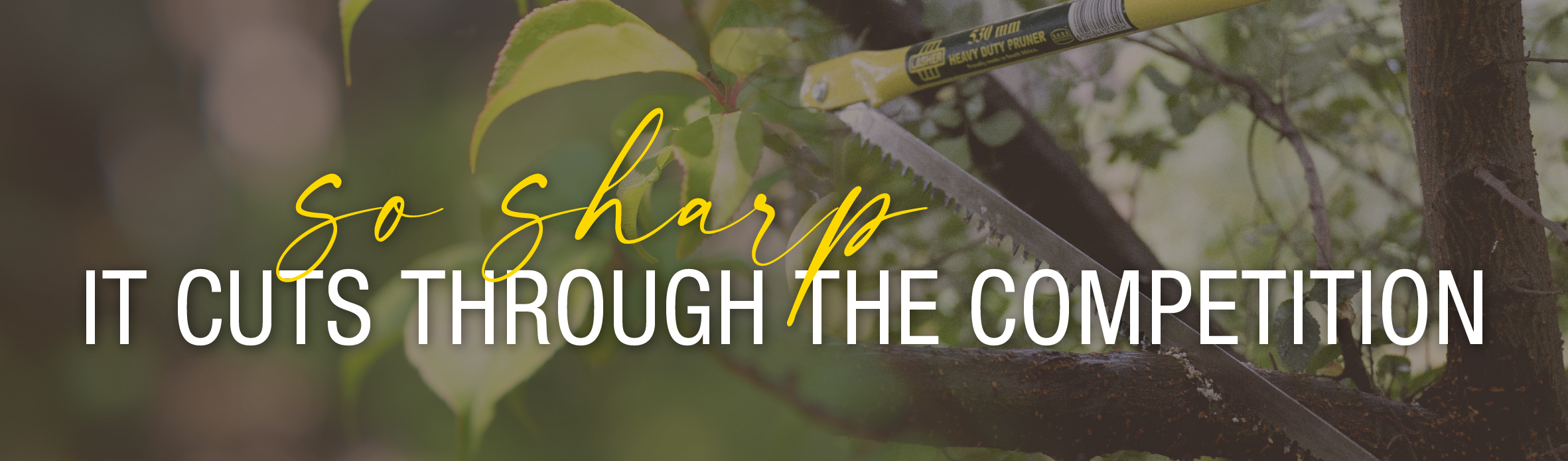
If you’ve ever needed to trim a branch, saw through a log, or tackle a tough DIY timber job, you’ll know the value of a reliable cutting tool. That’s where the bow saw comes in.
A bow saw is a type of hand saw with a curved, metal frame and a long, narrow blade stretched tightly between the ends. This tensioned design keeps the blade straight while you work, allowing for fast, smooth edges with minimal effort.
Thanks to its lightweight build and ergonomic handle, the bow saw is easy to control, whether you’re clearing the garden, cutting firewood, or shaping timber for a home project. A good-quality model offers the right balance of comfort, strength and cutting power so you can focus on the task. With the right blade and a steady rhythm, it’s surprisingly satisfying to use and can make light work of even the tougher jobs.
Types of bow saws and their applications
Not all bow saws are the same. The size of the frame and the type of blade you use can make a big difference to the quality and speed of your cut. Here’s what you need to know when choosing one that’s right for your job.
Know your blades
Lasher Bowsaw Blades come in three types, each designed for specific cutting needs:
- Peg and Rake Blades: Ideal for cutting wet or green wood. The rake teeth efficiently clear wood chips to prevent clogging, making cutting smoother and faster in fresh timber.
- Irregular Point Blades: These blades feature staggered, uneven teeth perfect for dry or seasoned hardwood. Their design helps reduce binding and delivers a cleaner, controlled cut through tough, brittle wood.
- Regular Point Blades: With uniformly spaced teeth, regular point blades provide versatile performance and are suitable for general-purpose cutting in medium-density wood, both dry and green.
Keep a selection of these blade types handy to swap depending on your wood type and cutting condition for the best results every time.
Pick the right size frame
Bow saws come in a variety of frame sizes to suit different cutting needs. Our range includes 530mm, 600mm, 700mm, and 900mm frames, each designed to give you the right balance of control and cutting power:
- The 530mm bow saw is compact and easy to handle, perfect for pruning shrubs, trimming in tight spaces, or light-duty garden and household tasks.
- The 600mm frame offers a longer cutting stroke, ideal for tackling larger branches and thicker wood with more efficiency.
- The 700mm size provides even greater reach and cutting capacity, suitable for heavier work and bigger logs.
- The 900mm frame is the largest, delivering maximum cutting power for demanding tasks where length and leverage are key.
We offer two distinct ranges to match your workload:
- Heavy Duty (Yellow) Range: Designed for tough, professional-grade use. These frames are made from 1.6mm thick oval steel tubing for extra strength and durability. This range is SABS approved, ensuring they meet stringent quality and safety standards. The epoxy-coated finish enhances wear resistance for a longer-lasting tool.
- General Purpose (Green) Range: Suitable for everyday tasks and lighter work. These frames use 1.2mm thick steel tubing and have an epoxy coating for protection.
Choosing the right frame size and range for your needs helps avoid common problems like blade dullness, sticking, or excess strain. With the proper combination, you’ll cut faster, cleaner, and with less effort.
The benefits of using a bow saw
If you’re looking for a cutting tool that’s fast, effective and easy to handle, a bow saw is a smart choice. Whether you’re a seasoned tradesperson or just tidying up the garden, here’s why it’s worth having one in your toolkit.
- Versatility: Bow saws are suitable for a wide range of tasks, from pruning and clearing brush to cutting timber or firewood. Just switch out the blade to match the job – wet or dry wood, small branches or large logs.
- Speed and efficiency: The long blade and frame design allow for a longer stroke, which means you can cut through wood faster with less effort compared to smaller saws.
- Control and precision: The tensioned blade stays straight during use, giving you greater control and tidier results. This is especially helpful for detailed work or when you need to make accurate cuts outdoors.
- Ease of use: Compact, light in the hand and well-balanced. They don’t require power or fuel, so you can use them anywhere, anytime – no cords, no charging, no fuss.
- Cost-effective: With a simple frame and replaceable blade, bow saws are affordable to buy and cheap to maintain. A durable model offers years of reliable service with minimal upkeep.
The limitations to keep in mind
While bow saws are incredibly useful, they do have a few limitations depending on the type of task you’re taking on:
- Not ideal for precision carpentry: If you’re doing fine joinery or intricate work in hard wood, a smaller backsaw or fine-tooth hand saw might be a better fit.
- Manual effort required: Bow saws rely entirely on your strength and technique. While they’re lightweight, cutting large volumes of wood by hand can still be tiring.
- Blade limitations: The blade needs to be suited to the material. Using the wrong blade – for example, cutting wet wood with a dry wood blade – can result in slow progress and uneven results.
- Space needed for full strokes: Because of their frame design, bow saws require enough room to move the blade freely back and forth. In tight spaces, a smaller saw might be more practical.
Bow saw tips for safe and effective use
To get the most out of your bow saw and stay safe while using it, follow these practical tips:
- Choose the right blade: Match your blade to the material. Peg tooth blades are best for dry or hard wood, while peg and rake tooth blades are ideal for wet or green wood. Using the wrong blade slows you down and wears out the teeth more quickly.
- Tension the blade properly: A loose blade can wobble, bind or jump mid-cut. Many bow saws use a lever-action tensioning system that makes it easy to keep the blade tight. A well-tensioned blade cuts cleaner and lasts longer.
- Use smooth, controlled strokes: Let the saw do the work. Avoid jamming it into the wood or forcing the blade. That can bend the frame or damage the teeth. A steady pace is more effective and less tiring.
- Stabilise your workpiece: Always secure the wood before you cut. Whether you’re working on a sawhorse, a log pile or directly on the ground, stability is key to staying safe and getting a straight cut.
- Mind your positioning: Keep both hands on the saw and make sure you’re standing in a firm, stable position. The bow frame gives you cutting power, but you need enough space to move it freely.
- Wear gloves and eye protection: Sawdust, wood chips and sharp teeth can all cause injury. A good pair of gloves improves grip and protects your hands, while safety glasses guard against flying debris.
- Check for blade wear: Hardpoint blades last longer than standard ones, but even they go blunt over time. If the saw starts snagging or feels sluggish, it’s probably time to replace the blade. A fresh blade is safer and more efficient.
- Store it safely: After use, wipe down your bow saw and store it in a dry place. Use a blade cover if you have one, or hang it up. This prevents rust and avoids accidental injury when reaching into your toolbox.
Final thoughts
With the right technique and a well-maintained tool, a bow saw will reward you with refined finishes time and again. Our tough-as-nails frames, quality blades and no-nonsense design mean less effort and better results – whether you’re trimming trees or tackling a stubborn log.
Wet wood? Dry wood? Short cuts or long strokes? There’s a Lasher bow saw for that. Whichever you choose, you’ll get a tool that’s built to work as hard as you do.
Looking for some bow saw comparisons? View our full range below.
20/08/2025
True tools that make the best of every workday easier to achieve.