

When most people shop for a wheelbarrow, they focus on the pan size, the handles, or the price tag. But the part that does the real work – the wheel – is often overlooked. And yet, the wheel determines how smoothly you move heavy loads, whether you can push over uneven ground, and how long your wheelbarrow will last before you need repairs.
Wheelbarrow wheels aren’t all the same. Some glide over building rubble, while others are built for sand, soft soil or heavy industrial work. Some never puncture, and others offer more cushioning on impact. Understanding these differences helps you get better performance, avoid unnecessary costs, and match the wheel to the work you do every day.
Lasher Tools has refined these designs for decades, supplying professional-grade wheelbarrow wheels for agriculture, construction, landscaping, municipal work and home use. Recent upgrades – including new poly hubs, updated PVC outers and low-profile heavy-duty options – bring even better durability and stability to the range
Understanding what makes wheelbarrow wheels different
Before comparing individual wheel types, it helps to understand the main components that influence performance.
1. Hub Material
The hub is the centre of the wheel and affects stability and load capacity.
- Polypropylene (poly) hubs: Lightweight, rust-free and tough enough for general-purpose and construction tasks. Poly hubs are becoming more common as they resist corrosion and reduce long-term maintenance.
- Steel hubs: Extremely strong and preferred for heavy-duty applications. They offer maximum rigidity and are ideal for harsh industrial environments.
2. Bearings
Bearings determine how smoothly the wheel rolls under load.
- Sintered bush: Low-maintenance, durable and suitable for everyday garden and light construction use.
- Roller bearings: Designed for heavier loads and smoother rolling across long distances, especially in professional construction and industrial settings.
3. Tyre Outer Material
This is the material on the outside of the wheel – the part that meets the ground.
- Solid PVC outer: Highly durable, puncture-resistant, and long lasting. Excellent for mixed terrain and general construction.
- Solid rubber outer: Provides a smoother ride and improved traction. Best for heavy-duty work and uneven terrain.
- Puncture-free composite: A blend of rigid, impact-resistant material that eliminates risk of flats. Ideal for gardens, farms and job sites filled with thorns, rubble or nails.
4. Tread Pattern
The wider or deeper the tread, the better the traction.
- Wide tread: Offers stability and grip on loose soil, gravel and construction ground.
- Smooth or low-profile tread: Creates effortless rolling on hard surfaces and across longer distances.
5. Load Capacity
Some wheels are designed for lighter garden use, while others are SABS-approved for industrial work and heavy loads. Choosing the right capacity ensures safety and reduces long-term wear and tear.
Lasher wheelbarrow wheels comparison chart
At a glance
| Wheel Type | Best For | Key Strength | Terrain Suitability | Maintenance |
| Puncture-Free | Home, farms, landscaping | Zero punctures; long lifespan | Thorns, gravel, garden paths | None |
| Sandmaster | Coastal areas, soft ground | Excellent floatation | Sand, beach, soft soil | Very low |
| Falcon Wheel | DIY, light construction | Reliable everyday performance | Grass, garden soil, general terrain | Low |
| Builder Wheel | Daily building work | Strong poly hub; solid PVC outer | Construction sites, uneven ground | Low |
| Heavy Duty Wheel | Industrial & high-load tasks | Extreme durability; rubber or PVC options | All terrains including rubble | Low |
The wheel types explained
Puncture-Free Wheel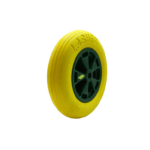
Lasher’s puncture-free wheel is one of the most popular options among gardeners, farmers and contractors who want zero downtime. Thorns, sharp rubble or nails won’t stop you from working, making it a dependable option for mixed outdoor environments.
These wheels are available on the Falcon Poly, Falcon Steel and Builder wheelbarrows, offering a versatile fit across the range.
Why choose it: You want a wheel that never goes flat, never needs inflating and stands up to unpredictable ground conditions.
Best for: Gardens, farms, landscaping, and anyone who works around debris or thorny vegetation.
Sandmaster Wheel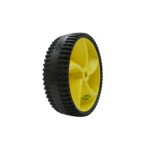
If you’ve ever tried pushing a wheelbarrow through beach sand or loose soil, you know how much the wrong wheel sinks. The Sandmaster wheel solves this by distributing weight more evenly, allowing it to “float” across soft terrain instead of digging in.
Available on Falcon Steel and Poly wheelbarrows, as well as the Builder wheelbarrow, this wheel is engineered to handle soft surfaces while maintaining stability.
Why choose it: You live or work in sandy or coastal environments, or you regularly push loads over soft terrain.
Best for: Construction sites with loose fill, beach areas, nurseries, farms and landscaping.
Falcon Wheel
The Falcon wheel is a solid all-rounder. With dependable build quality and a practical tread, it’s designed for everyday use in gardens, small farms and light construction. It’s a go-to choice for homeowners and small contractors who need reliability without heavy-duty specifications.
Available on both steel and poly Falcon wheelbarrows, the Falcon wheel strikes a balance between durability and affordability.
Why choose it: You need a wheel for regular DIY work and standard outdoor tasks.
Best for: Garden soil, grass, paving, and general-purpose movement.
Builder Wheel (Upgraded)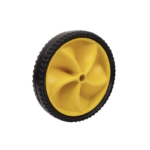
The Builder wheel now comes with an upgraded wheel featuring a poly hub and a solid PVC outer, designed for high durability on construction sites where wheels take a beating. This improves resistance to cracking, warping and corrosion, especially in harsh working environments
Why choose it: You work in construction and need a wheel that can take daily loads of bricks, rubble, cement and tools.
Best for: Heavy site work, uneven terrain and long-term durability.
Heavy Duty Wheel (Two New Options)
Lasher’s heavy-duty wheelbarrows now feature two upgraded wheel choices, each engineered for extreme performance:
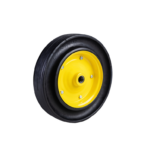
 1. Heavy Duty Low-Profile Wheel
This wheel uses a poly hub, roller bearings, and a solid PVC outer. It offers puncture-resistant durability with a stable, controlled ride. The low-profile design improves handling and makes it easier to push heavy loads smoothly across mixed terrain. Product codes (e.g. FG81044 and FG83040) confirm this is part of Lasher’s new-generation heavy-duty lineup
 2. Heavy Duty Rubber Wheel
Built with a steel hub, roller bearings, and a solid rubber outer, this wheel offers exceptional traction and is designed for industrial environments where maximum strength is non-negotiable. Smooth handling across rubble, stones and compacted surfaces makes it ideal for professional construction teams.
Both variants are SABS approved, providing assurance of quality and safe load-bearing capacity.
Why choose Heavy Duty: You push extremely heavy loads daily and need maximum stability and lifespan.
Best for: Industrial construction, mining environments, municipal services and large-scale agricultural work.
How to choose the right wheel for your needs
Choosing a wheelbarrow wheel becomes easy once you make a few simple decisions. Use this step-by-step guide to narrow down your options.
1. Consider Your Terrain
- Hard surfaces like paving or concrete: Low-profile or rubber wheels roll effortlessly.
- Soft sand or loose soil: Sandmaster is your best match.
- Mixed garden terrain: Falcon or puncture-free wheels work well.
- Harsh construction ground with rubble and debris: Builder or Heavy-Duty wheels offer the right durability.
2. Think About How Often You Use Your Wheelbarrow
- Occasional weekend use: Falcon wheels are perfectly adequate.
- Daily professional use: Builder or Heavy-Duty wheels are better suited.
- Farm or landscaping work: Puncture-free or Sandmaster wheels reduce downtime.
3. Assess Load Weight
- Light to medium loads (garden waste, compost): Falcon or puncture-free wheels.
- Heavy loads (bricks, cement, stone): Builder or Heavy Duty wheels.
- Very high-load, industrial tasks: Heavy Duty Rubber wheel.
4. Maintenance Preference
- No maintenance at all: Choose puncture-free.
- Low maintenance but smoother rolling: Builder or Falcon.
- Professional-grade, long-term performance: Heavy Duty wheels with roller bearings.
5. Quick selector guide
- Hate punctures? Go Puncture-Free.
- Do daily construction work? Choose Builder or Heavy Duty.
- Work in coastal sand or loose soil? Pick Sandmaster.
- Need a reliable all-rounder? Go with Falcon.
- Push extremely heavy loads on rough terrain? Heavy Duty Rubber is your best option.
Built to keep you moving
Choosing the right one makes a noticeable difference in how efficiently you work. With Lasher’s range – from puncture-free and Sandmaster to Builder and Heavy Duty – you can match your wheelbarrow to your exact needs, terrain and workload.
The latest upgrades, including new poly hubs, improved PVC outers and heavy-duty rubber options, reflect Lasher’s ongoing commitment to consistent, uncompromising quality. Whether you’re a home gardener, farmer, contractor, landscaper or municipal worker, the right wheel gives you better traction, longer lifespan and fewer maintenance headaches.
A wheelbarrow is only as good as the wheel it rolls on. With Lasher, you can count on performance that’s built tougher, built smarter and built to keep you moving.

07/01/2026
The actual core of the collection with an endless list of ‘practical’ functions and duties on ‘every’ site of life; even where one would think Meneer Wielie Krywaar would not go, he goes. Stru! The wheels of time and history and industry have been spun around the wheel of the Lasher Krywaar😊🥳😇